Railings
If you lean against a cable railing, you’ll feel that the cable is taut. It’s installed to run through the posts and securely resist any weight that is put on it. That said, you may feel the cable move slightly when you lean into it. That’s because quality steel cables are slightly elastic. They’ll give a little bit, but that doesn’t stop them from securely holding up to 15,000 pounds. That is, if the cables are tight enough and properly installed. So, just how tight should the cable railings be?
Building Code Requirements for Cables
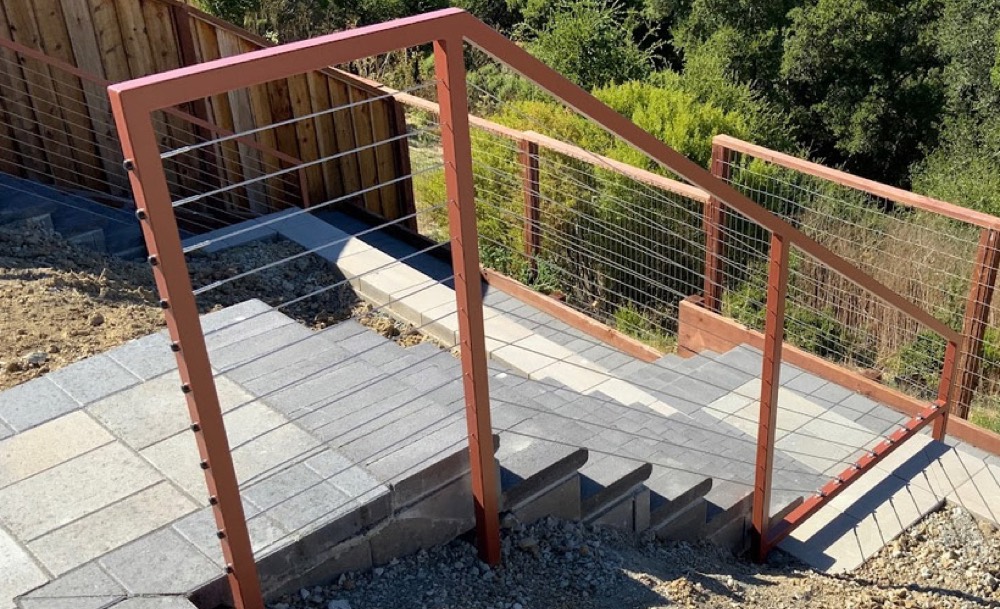
Building codes require the cables in a cable railing system to achieve a specific tension. For example, many codes do not allow cable railings to deflect or bend more than four inches away from one another. A four-inch sphere should not be able to pass through your cable railing for safety reasons. Requirements vary by city and county, so check with your local building department, or with us, to find out what applies to your property across our Bay Area service area.
Sagging or Warping Isn’t Okay
Even the highest quality cables will deflect slightly, as they are supposed to. However, a cable that is constantly sagging, without anything leaning against it, is a safety concern. Further, a sagging or warping cable really detracts from the overall looks of the property. Whether it’s your home or business property, a cable that isn’t tight enough can undermine your efforts to keep the property looking sharp.
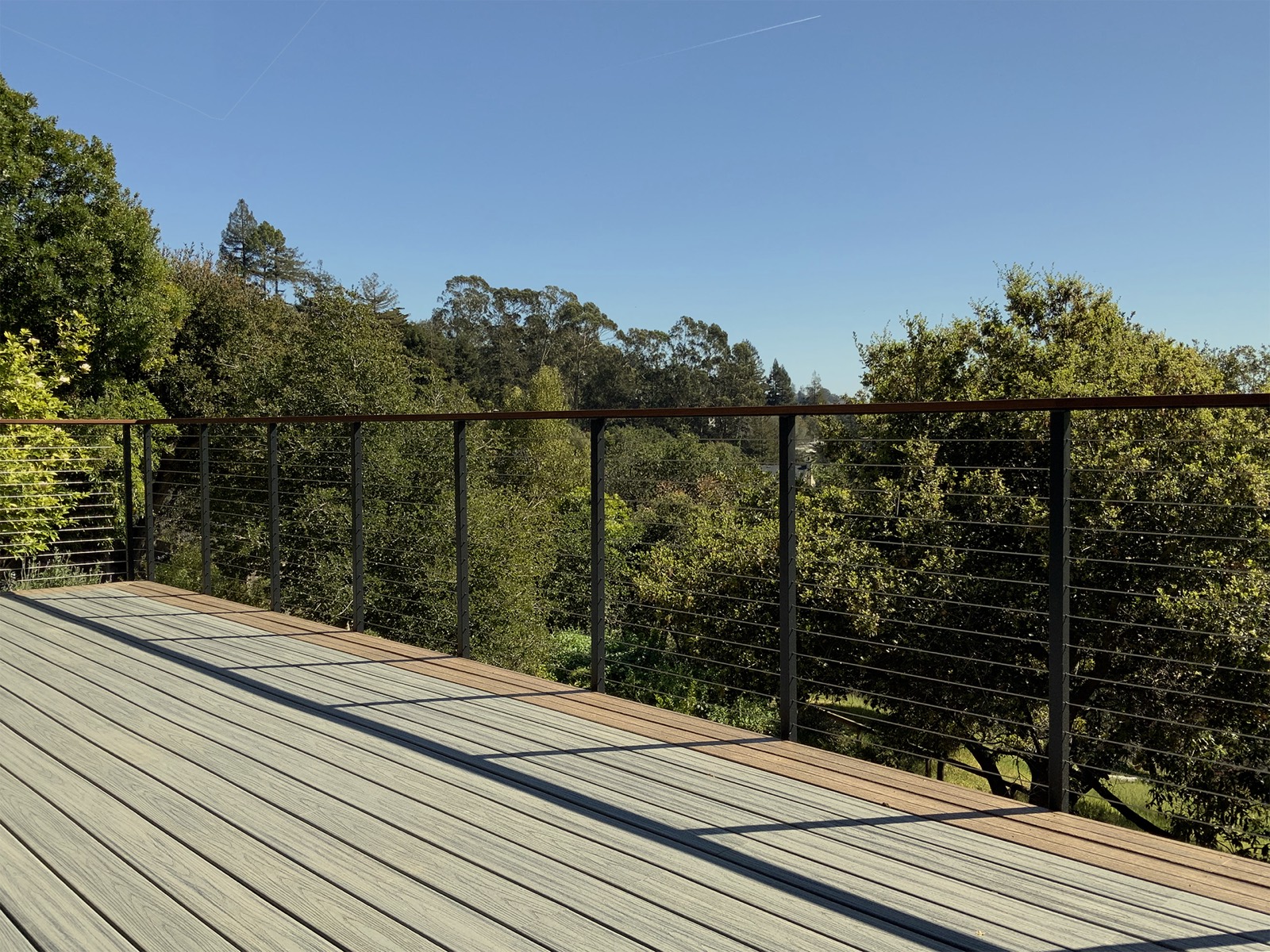
Properly installed cable railing systems should never sag, warp, or buckle. We can achieve these high-quality railings by using better cables, better posts and installing the system with great attention to detail.
For cables, preventing sagging is simple. While other companies might use vinyl-coated or galvanized cable, we use marine-grade cable. Unlike the others, marine-grade steel grade cables will not deteriorate in ultraviolet light from the sun. They’ll maintain their integrity for years, so you don’t have to worry about them sagging or even buckling in the future.
What About Post Quality?
Sometimes a poorly designed cable railing system will sag not because the cable has given out, but because the posts were not chosen or installed properly. Ideally, the posts and cable would contract and expand at the same rate as temperatures change. If they do not, then they are both stressed over time.
We avoid this by using larger wooden posts, at 4×6 and 6×6, that will not negatively affect the whole system as temperatures heat up or cool down. As for metal, we use high-quality posts from great suppliers such as Feeney Inc. We also offer GatorShield® posts that have a thinner profile, as small as 2 inches square, to maximize your view without sacrificing the quality of the system.
The Big Picture
In the end, the design of your whole cable railing system is what will prevent a loosening or warping of the cables over time. Each part of the system needs to be high-quality and designed to work together to resist the stresses of time and temperature. That’s why our co-owner and lead installer, Tom Salas, personally oversees each of our cable railing installations, so that he can ensure the system will meet our high expectations. Browse our gallery to see the results.